
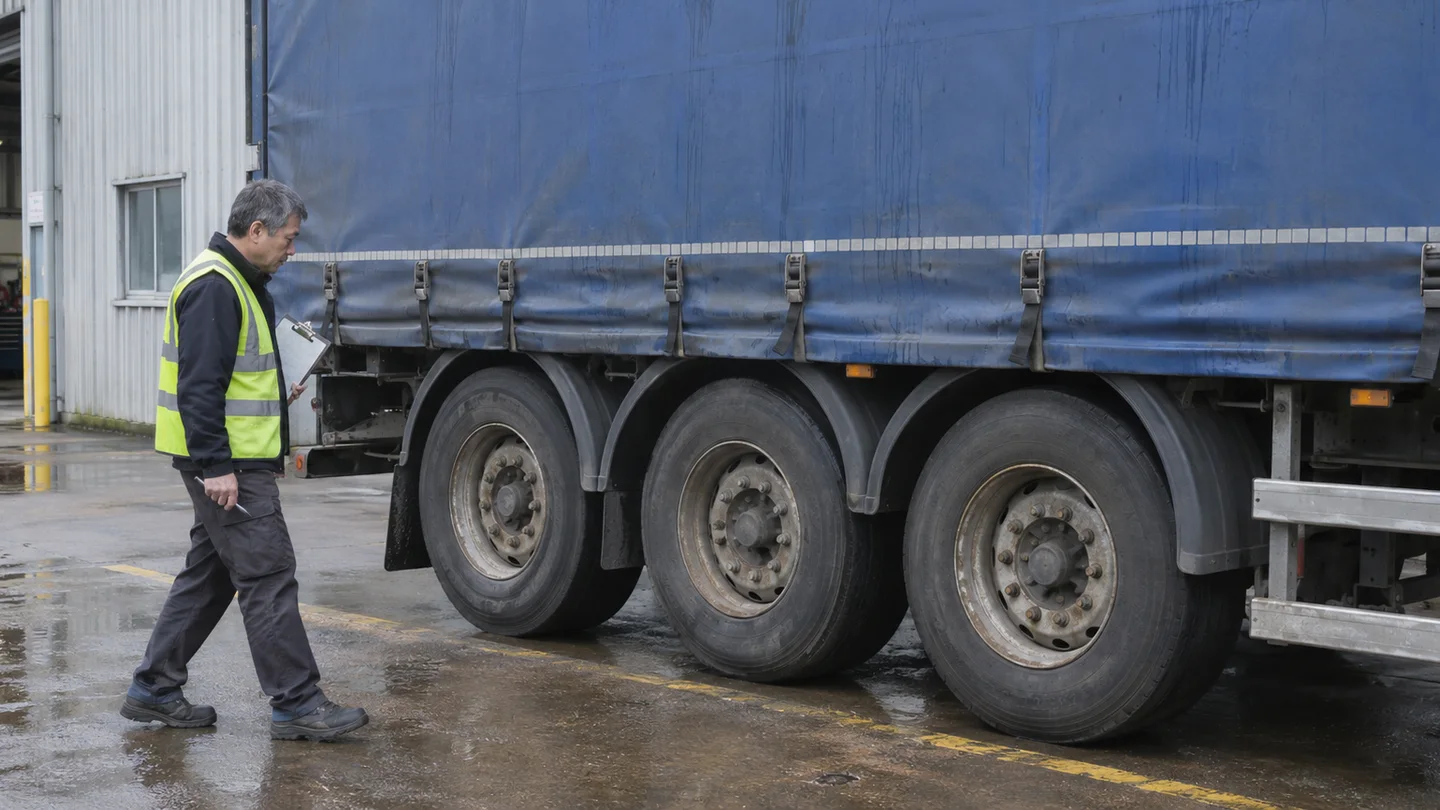
Start at the wheel ends
With the trailer secured, walk along both sides and note anything that differs from the previous inspection. Look for cracked wheels, missing or visibly loose fasteners, damaged tyre sidewalls and debris between dual tyres. Signs such as fresh rust trails around a fixing or a shifting washer may warrant closer inspection.
Look for fresh lubricant around the hub or on the inner face of the wheel. Record the affected wheel position and whether the residue is fresh or old. A leak near a brake assembly needs prompt workshop attention.
Look along the suspension and frame
From a safe position outside the vehicle, look for an air line rubbing on a bracket, a displaced mounting point or a trailer sitting unevenly. Record visible air spring damage or a persistent air leak. Let a qualified technician investigate areas that cannot be reached safely from outside.
Log the observation before dispatch
Record axle position, side, trailer identification and a clear photo. Have safety defects assessed before dispatch and follow the vehicle’s inspection instructions for the exact setup. A photo of the axle or suspension identification plate is especially useful when a replacement part is needed.