
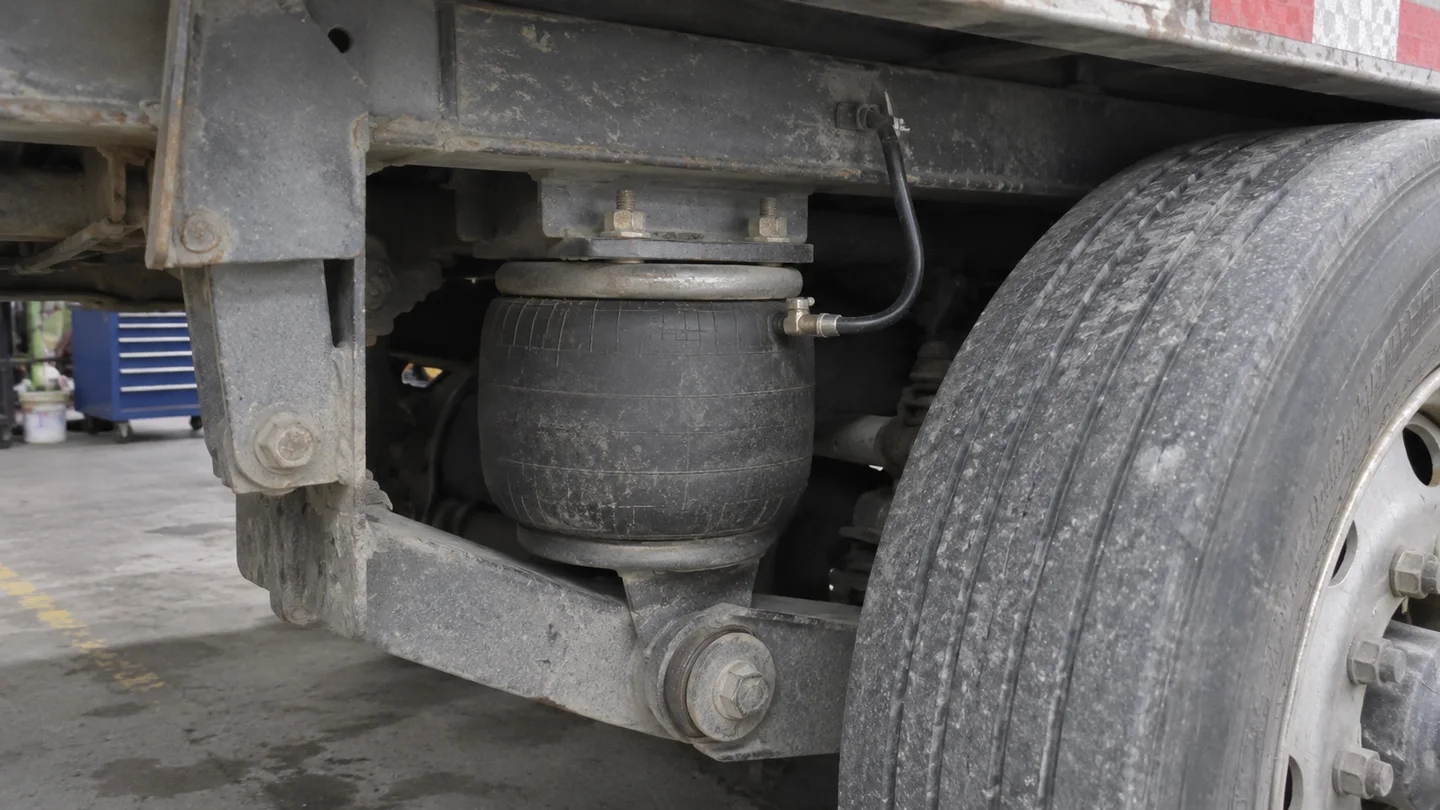
Inspect from a safe position
With the trailer secured, look from outside for chafing, cuts, shifted air lines or a bellows rubbing against nearby hardware. Check both sides, since one damaged air spring or mounting point may be easier to spot by comparison. Never work under a vehicle supported only by its air suspension.
Record changes in ride height
Uneven height or a trailer that settles unexpectedly can point to several issues, including air leaks, valves or mechanical damage. Note whether it occurs while parked, while loaded or after a particular event. Have an uneven or leaking system assessed by a qualified technician before use.
Ride height is measured from the reference points specified for the installed suspension. Use those reference points and the model-specific procedure. Values from another trailer may describe a different configuration.
Match the assembly and mounting interfaces
For a replacement enquiry, send the suspension tag, air spring part number if visible and photos of the mounting points. Include axle beam section and the installation dimensions available from your drawing. Matching by bellows diameter alone can miss differences in the base, top plate or mounting offset.