
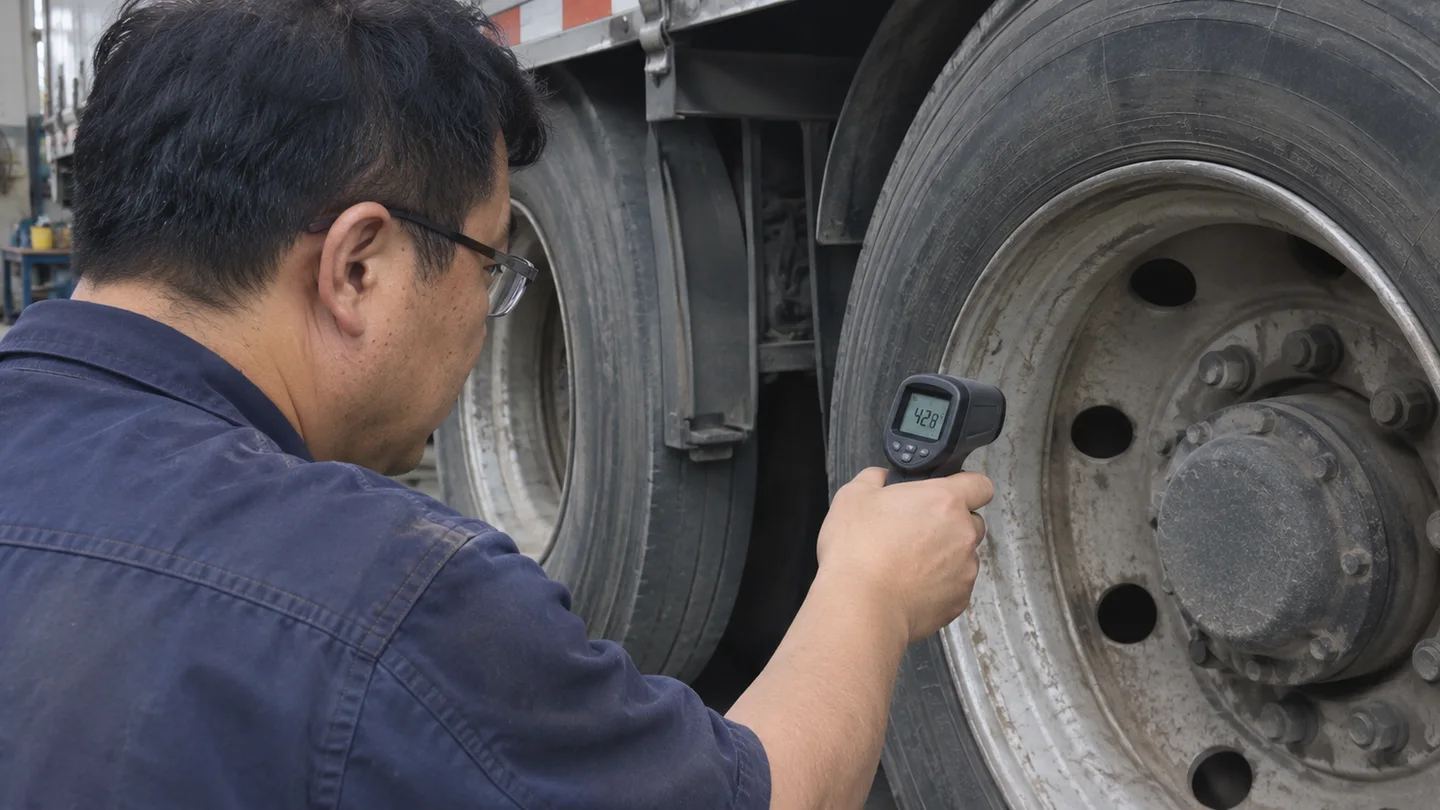
Treat severe heat as a fault
If you notice smoke, a burning smell, significant heat or noise, stop safely and arrange inspection. Keep clear of the wheel end and avoid touching it. Follow fleet procedures for roadside incidents, especially if there are signs of fire or a brake problem.
Compare like with like
A workshop can compare wheel positions under similar conditions. Recent braking, load, route and measurement location all affect a reading. A reading taken at the brake drum is different from one taken at the centre of the hub. Record where and when the observation was made.
Give the technician a useful history
Brake drag, lubrication loss and wheel bearing problems can all produce heat. Note whether the issue followed brake work, a wheel-end service or a particular trip. Include any visible oil residue, sounds, warning messages and the model on the existing wheel end. The technician can use the service manual for that assembly to verify the cause.